Editing Magnus Hirschfeld’s “Sexual Pathology”
Traduzione in Italiano: Editing Sexual Pathology
I am very curious about the history of gender and sexuality, and especially in the way that these topics were seen in the past. There’s a stereotype that people before the 1980s were bigoted and morally sex-repulsed, and completely unaware of sexual and gender variance.
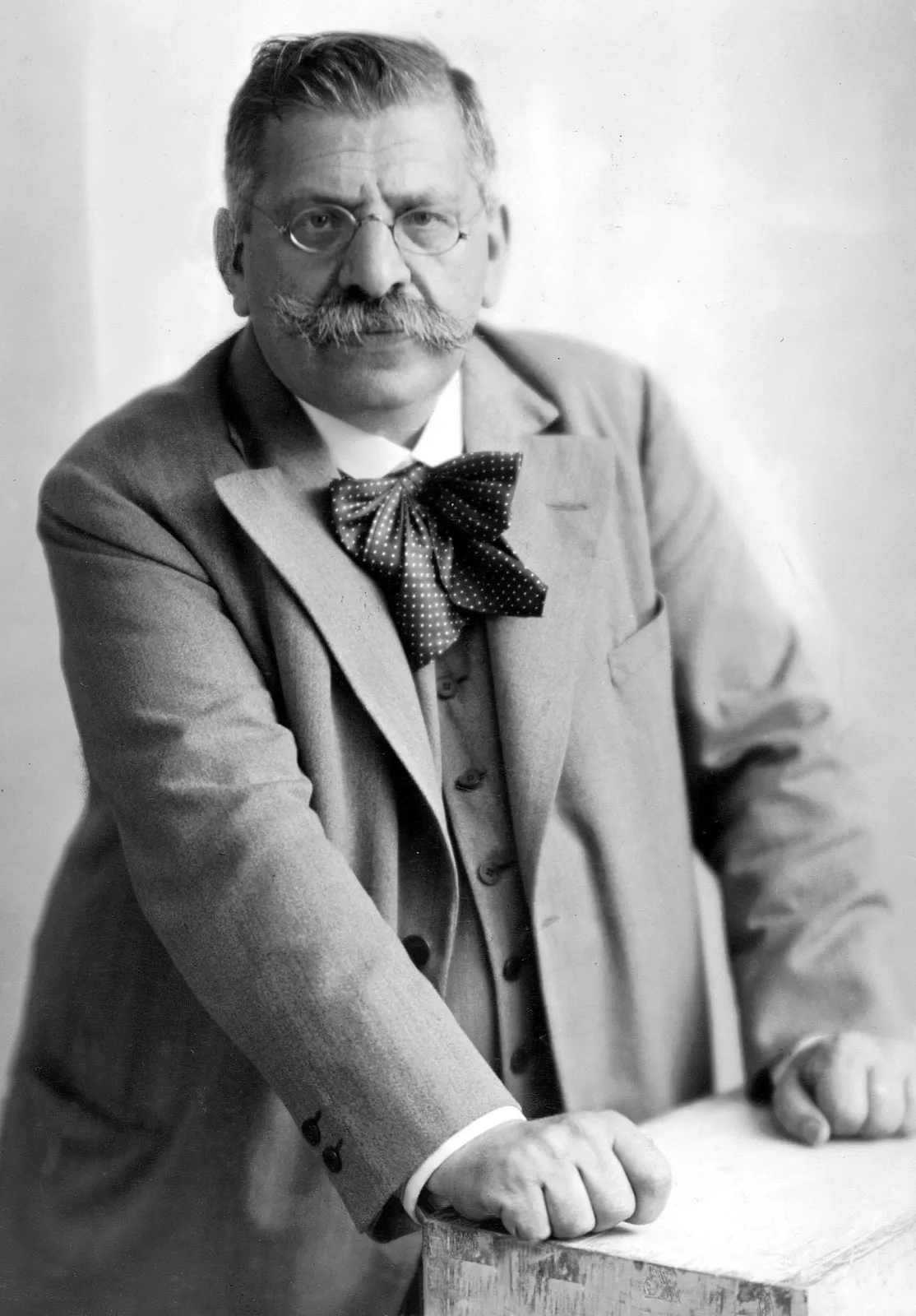
Even though this was never the case, the scientific study of sexual phenomenons is relatively young. Magnus Hirschfeld was one of the fathers of Sexology, being active as a medical doctor since 1896.
He is mostly known for his research in the field of sexual orientation and for his activism for the decriminalisation of homosexuality. In 1919, he founded the Institute for Sexual Science in Berlin, which is considered the first sexology institute in the world.1
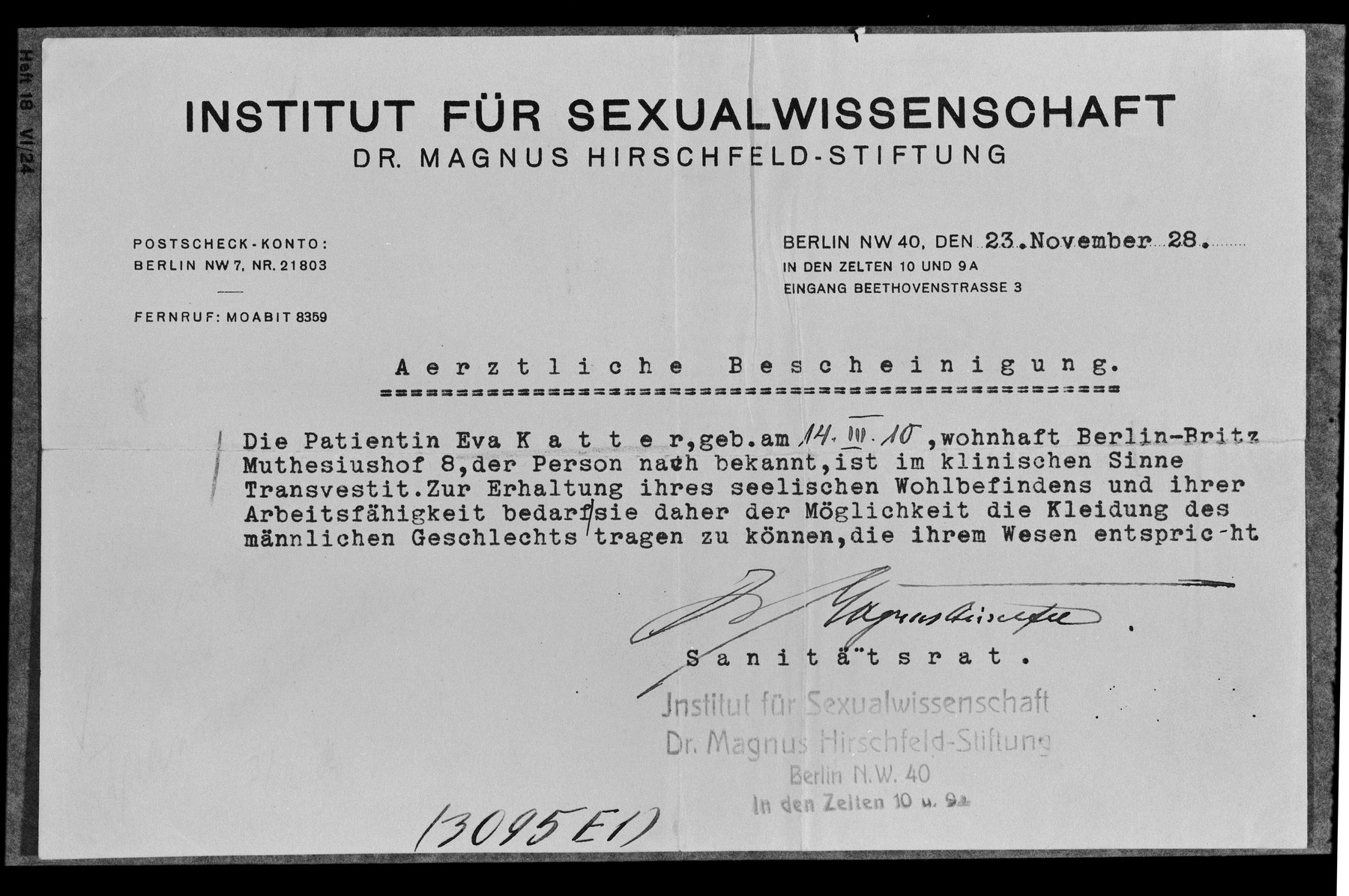
He also conducted groundbreaking research in the fields of transvestism and transsexuality. He is credited with coining the term “transvestite”. He would write cross-dressing permits so that transvestites and transgender people of Berlin could go out in public in their preferred clothes.
In 1910, he published The transvestites, a collection of his discoveries on cross-dressing. Twenty years later, in 1931, the Institute of Sexual Science would execute the first known complete sex reassignment surgery on Dora Richter.
In 1933, Nazis attacked the Institute, and burned the invaluable records and books it contained. Fortunately we still have Hirschfeld’s published books, which include Homosexuality in Men and Women, Racism and Sexual Pathology.
What is Sexual Pathology?
The original Psychopathia Sexualis was a book written in 1844 by the Russian physician Heinrich Kaan, in which he inaugurated the field of sexology by cataloguing what he considered to be the six sexual aberrations: masturbation, pederasty, lesbian love, necrophilia, bestiality, and the violation of statues.
This book quickly became obsolete, and was replaced by Krafft-Ebing’s Sexual Psychopathy: a Clinical-Forensic study. The book details a wide range of paraphilias and focuses on male homosexuality and bisexuality. It is considered to contain the first use of the term bisexual to indicate sexual attraction to both men and women.
Thirty years later, in 1917, Magnus Hirschfeld published Sexualpathologie: ein ür Ärzte und Studierende, which I found in the 1932 English translation by Jerome Gibbs, called: Sexual Pathology: being a study the abnormalities of the of sexual functions, An Exhaustive Treatise on Sexual Symbolism, Hypereoticism, Impotence, etc., Based Upon Research, Observations and Recent Clinical Data Gathered at the Institute for Sexual Science in Berlin.
Sexual Pathology is divided in three sections: Sexual symbolism, hypereroticism and impotence. The first one discusses in depth the nature of fetishes and antifetishes, the second one lists cases in which the excessive sexual desires of a person have created harm to themselves or to others. The third part describes the types and the causes of sexual impotence.
The editing
I was really curious to read this book, and fortunately I found it online. The version I found on archive.org was a scan of the pages of a book from 1932. So I went on and tried to convert it to EPUB automatically(without success) and then manually, with great success.
Ironically, some days after I had converted it to EPUB, and tested it on my Kindle, I found out that someone had updated it on Library Genesis. So I could have avoided all the hustle. At the same time, I’m happy I perfected my method.
Library Genesis may not work if you don’t use a VPN. I use Mullvad VPN, that seems to be one of the most privacy-friendly, and costs me 5 euros a month. But if you only want to use it to access this site you may as well use one of the free ones.
This is what I did to convert Sexual Pathology:
I installed Calibre;
I tried to automatically convert with Calibre and failed.
I used pdftotext to export the text of the book into a markdown file.
I edited the markdown file in Vim, changing the formatting and correcting the OCR errors.
I converted from .MD to .EPUB and added the images in with Calibre
I converted from .EPUB to .MOBI with Calibre
I put it into my Kindle device.
I will link here the summary of the book.
Sexual Pathology - Table of contents
Review of the book
Overall, I’m happy I read this book because it gave me a lot of anecdotes to share with my friends, and also gave me a big insight into the past of sexology. I really enjoyed the reactions that people in example cases have to a behaviour that they see as sexually abnormal.
I wouldn’t recommend this book as a sexology textbook, as I’m sure the scientific beliefs are very outdated, but it certainly has an historical significance.
Asexuality
One of the points of interest, for me, was Hirschfeld’s ambiguous view on asexuality. He poses the question on the existence of asexuality, but he doesn’t answer it. As it was common, he represents asexuality as an absence of sexual urges, instead of an absence of sexual attraction to others.
Discussing some alleged asexual people of the past(such as famous philosophers), he states that those people had sexual urges, which they expressed “leading an autistic sexual life”. I don’t know exactly what he meant, but I suppose that he was referring to masturbation, which is not incompatible with asexuality in the modern sense.
He actually quotes a patient of his who could have been asexual. She wrote to him:
I like very much to caress people who are agreeable to me, and can kiss and fondle them without aversion. But as soon as they demand more from me, there arises in me a feeling of indignation and aversion with is even to me quite inexplicable, and I am quite disconcerted that my caresses should be taken as a sign that I was seeking sexual pleasure.
Is that hyperaesthesia? But then sexual intercourse between two other people would of necessity seem to me unclean and revolting. That is absolutely not the case.
Even though she wants affection and is not disgusted by sex per se, she doesn’t have sexual desire towards other people. She was included in the book because of her passion for match-making, since she didn’t have sexual anomalies.
Treatment of women and sexual minorities
One other thing that I found most interesting is the fact that the author casually takes for granted the existence and the normality of homosexuality and bisexuality, and the sexual desires for women, with a specific worry for their sexual satisfaction. Unfortunately, this concepts are still not treated as obvious today.
I hoped to find more about transsexual and transvestite patients, but unfortunately there is only one reference to transvestitism, stating that it’s not a fetish.
Things that made me cringe
He showed some really outdated opinions on consent that I found pretty revolting, so if I had to read it again I would skip the part were he talks about women “wanting to be raped”. Other than this, the book aged pretty well.
Have a nice day,
21/06/2023